
A lot of people think productivity means waking up at 5AM, drinking green liquid from a futuristic bottle, tracking 14 habits and somehow becoming emotionally stable through Google Calendar colors.
But honestly?
Most weeks don’t fall apart because people are lazy.
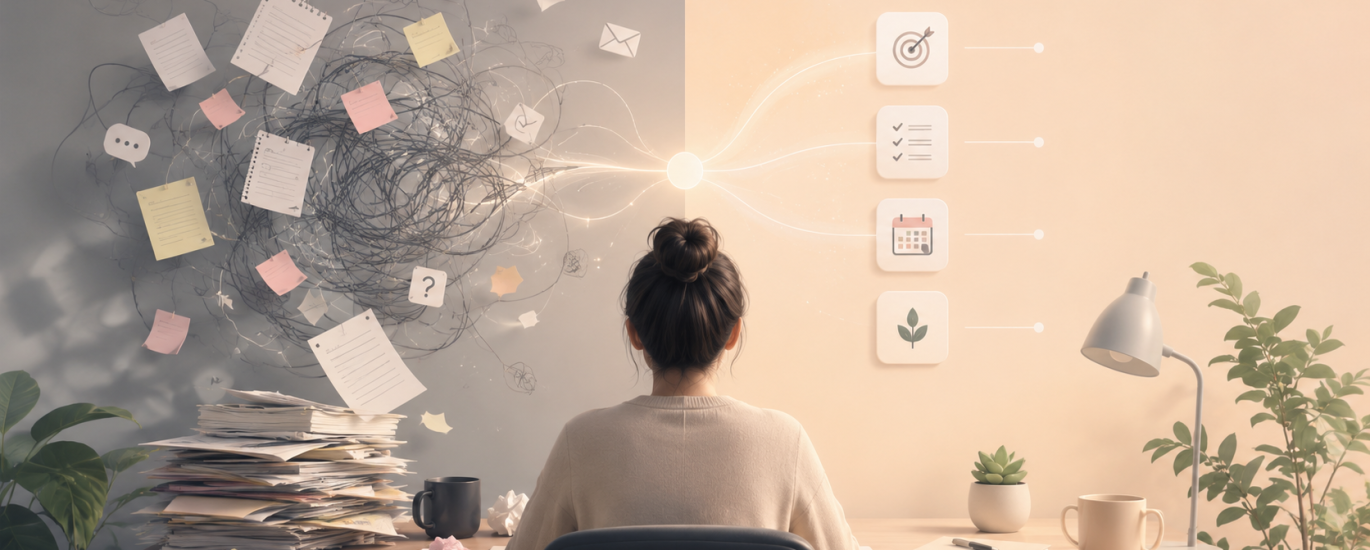
They fall apart because their brain is carrying too many open loops at the same time.
And this is exactly where AI has quietly become weirdly useful.
Not as a “replace your job” machine.
Not as a magical robot assistant.
But as a chaos reduction tool.
Because let’s be honest about how many people actually start Monday morning.
You wake up already thinking about:
- an unanswered email
- a thing you forgot last week
- a client message you still haven’t replied to
- three half-finished ideas
- one random life admin task
- a project that feels too big to start
- and somehow also “I should probably drink more water.”
Your brain becomes a browser with 42 tabs open.
One of them is playing music.
You don’t know which one.
And something is definitely overheating.
The funny thing is most people don’t actually need more discipline. They need less mental friction.
That’s why one of the most useful AI workflows right now is something we call:
the 15-minute weekly reset.
Here’s how it works.
Before Monday (Sunday evening works great), open ChatGPT or your favorite AI tool and do a complete brain dump.
Not organized notes.
Not polished writing.
Chaos.
Throw everything in:
- unfinished tasks
- random ideas
- reminders
- screenshots
- copied Slack messages
- messy thoughts
- deadlines
- “don’t forget this”
- things you’re avoiding
- things you think are urgent
- voice note transcripts
- whatever is currently taking up RAM in your brain
Then give AI a prompt like this:
The Prompt
Help me reset for the week.

Organize everything into:
- top priorities
- quick wins
- deep work tasks
- things I should delegate, automate or postpone
- things that are not actually urgent
- and a realistic 5-day plan that won’t burn me out.
What happens next is surprisingly powerful.
Because AI doesn’t panic.
It doesn’t emotionally attach importance to every single thing.
Humans do this constantly:
we turn 27 unrelated thoughts into one giant emotional stress soup.
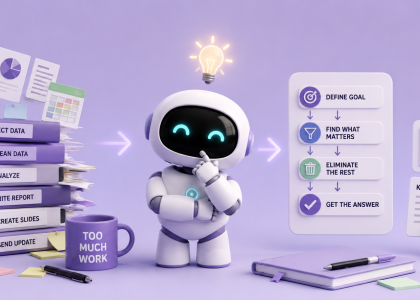
AI just sorts the pile.
And suddenly:
the impossible week becomes 3 actual priorities.
The giant scary project becomes:
“Step 1: send the email.”
“Step 2: gather references.”
“Step 3: stop catastrophizing.”
Honestly, half of productivity is simply reducing ambiguity.
When your brain doesn’t know where to start, everything feels equally urgent. That’s why people procrastinate. Not because they don’t care. Because the starting point feels foggy.
AI is surprisingly good at removing that fog.
Another underrated trick – ask AI to estimate realistic effort.
Most pople accidentally plan 14-hour workdays inside their head.
Try prompting:
“Which of these tasks are secretly larger than they look?”
or
“What can realistically be done in one focused day?”
You’ll often realize your problem isn’t lack of time. It’s unrealistic cognitive load.
And maybe the best part?
You stop carrying the entire week in your head. That alone changes your energy.
Because mentally holding unfinished tasks all day is exhausting.
Even before doing them.
The goal isn’t becoming a productivity robot.
The goal is reaching Monday without feeling like your nervous system already owes money.
And honestly?
If AI can help with that…
that already feels a little bit like magic.