
|
Watching a one-hour video to find one useful sentence is not research. It is hide-and-seek with a progress bar. |
||
|
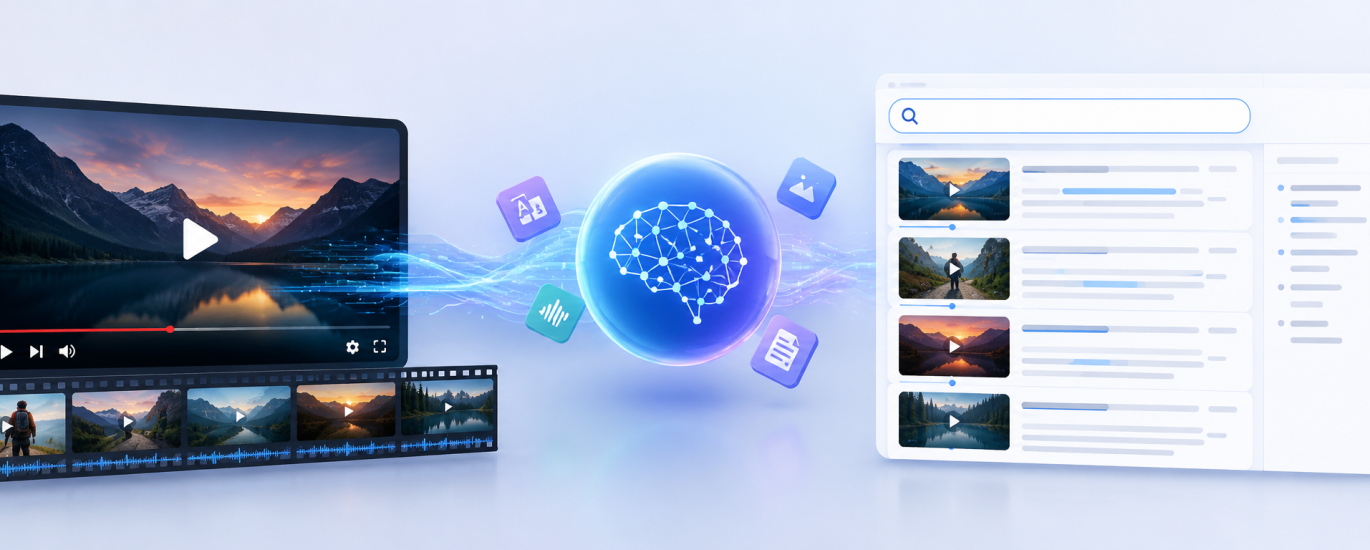
A faster approach is to turn the video into a transcript and search the text instead. Tools such as Descript, YouTube transcripts, and NotebookLM can transform meetings, webinars, interviews, lectures, and tutorials into documents you can scan, search, summarize, and question. |
||
|
For a YouTube video, open the transcript if one is available. For your own recording, upload it to a transcription tool such as Descript. Once the transcript is ready, you can search it like any other document instead of dragging the playhead around and hoping for the best. |
||
|
Search for words such as: pricing, deadline, customer feedback, next steps… |
||
|
You can jump directly to the relevant moment without rewatching everything that came before it. |
||
|
Imagine you missed a 50-minute team call. You probably do not need a summary of every sentence. You need to know what was approved, who is responsible, which deadlines changed, and what still needs a decision. |
||
|
Upload the transcript to NotebookLM or another AI tool and ask: |
||
|
||
|
Then follow with: |
||
|
||
|
That is considerably faster than watching everyone say, “Can you hear me?” again. |
||
|
The video becomes a reference document you can actually use later. |
||
|
Transcripts are also useful for editing. In tools such as Descript, clicking a sentence in the transcript takes you directly to that part of the recording, making it easier to find strong opening lines, short social clips, repeated points, awkward pauses, and sections that can be removed. |
||
|
You are no longer searching the video visually. You are editing by reading. |
||
|
For anyone who has spent 20 minutes looking for “that one sentence near the end,” this feels suspiciously close to magic. |
||
|
AI summaries can still miss details, so keep the original transcript and timestamps. When the tool gives you an interesting claim, quote, or decision, check the relevant section before publishing or acting on it. |
||
|
The goal is not to replace the video with an AI summary. |
||
|
The goal is to make the video searchable. |
||
|
Because video is excellent for watching once. |
||
|
Text is much better when you need to find something again. |
About the Author