


This weekend I decided to install OpenClaw, the AI agent everyone in tech seems to be quietly experimenting with  , and while the promise is undeniably exciting—an autonomous system that can actually execute tasks rather than just suggest them—the reality of getting it up and running made one thing very clear: this is not yet a tool for everyone.
The process started innocently enough, as most technical rabbit holes do, with installing Node.js and making sure npm was working properly, followed by cloning the repository through GitHub Desktop, which gave me a false sense of simplicity before things quickly became more complicated  , as running npm install led to a series of dependency errors, warnings about configurations I didn’t fully recognize, and moments where I found myself debugging basic issues like being in the wrong directory or missing a package.json file, which in hindsight sounds trivial but in practice adds friction that most non-technical users simply won’t tolerate.
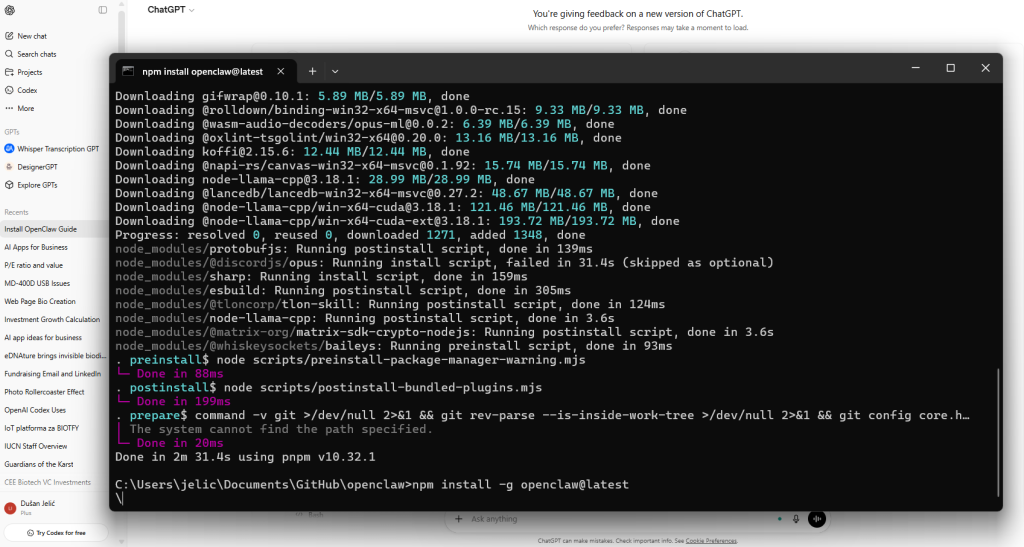
After some time spent troubleshooting—navigating between npm and pnpm conflicts, understanding how the project is structured, and realizing that the “obvious” way of installing it was not actually the recommended one—I eventually pivoted to the proper approach, which involved installing OpenClaw globally and running the onboarding process, a much smoother path but still one that assumes a certain level of comfort with terminals, environments, and system-level permissions, something that became especially apparent when the setup greeted me with a direct  security warning explaining that this agent can read files and execute actions on the machine, essentially positioning it not as a harmless chatbot but as a tool with real operational power.
And that is exactly where OpenClaw becomes interesting, because once you move past the installation friction, you start to see the potential in using it as a kind of junior operator capable of chaining together tasks like research, data structuring, and execution, making it particularly compelling for workflows such as lead generation, automated outreach, repetitive business operations, or any scenario where the value comes from completing multi-step processes rather than generating isolated answers  .
.
At the same time, that same power is what makes it a commodity that is not yet ready for a broader audience, because without an understanding of how to control its environment, limit its access, and interpret its behavior, the risks and complexity quickly outweigh the benefits, which is why, at least for now, OpenClaw feels less like a mainstream product and more like an early glimpse into the future of AI agents—something that builders, developers, and technically curious founders should absolutely explore, but something that most users are probably better off watching from the sidelines until the experience catches up with the ambition  .
.