There’s a strange pattern in tech: the biggest shifts rarely arrive with a bang. They slip in quietly, almost awkwardly, while everyone is still looking somewhere else. That’s exactly what’s happening right now with ChatGPT Apps.
At some point over the last year, ChatGPT stopped being just a place where you ask questions. It became a place where things happen. You don’t just generate ideas—you design visuals, plan trips, analyze data, even build products, all within a single conversation. And yet, most people are still treating it like a smarter Google.
The journey to this moment wasn’t exactly elegant. It started with plugins, which felt more like experiments than real tools. Then came custom GPTs, which exploded in number but often lacked depth. Now, the ecosystem has matured into something more cohesive: actual applications embedded directly inside ChatGPT. Not links, not shortcuts, but functional layers that execute tasks on your behalf.
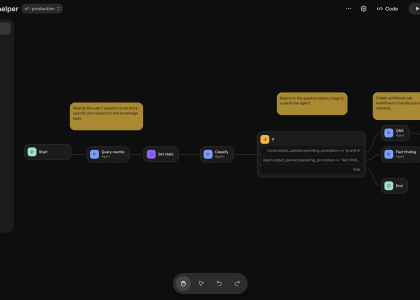
What makes this shift so powerful is not the variety of apps themselves, but the way they collapse complexity. Traditionally, doing anything meaningful on a computer meant jumping between tools—research in one tab, execution in another, formatting somewhere else. OpenAI Apps begin to erase those boundaries. The interface becomes conversational, and the work happens behind the scenes.
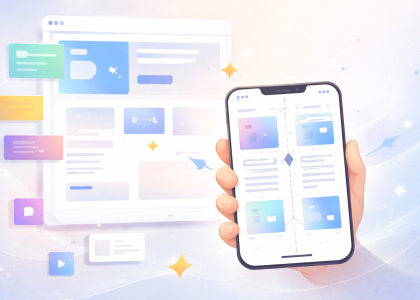
You can see this clearly in the types of apps that are emerging. There are tools for creation, like Canva, Figma, and Photoshop, which turn ideas into visuals. There are decision engines, such as Tripadvisor or Booking platforms, that help navigate choices. There are execution tools like Replit or Airtable, which allow you to actually build and manipulate things. Together, they form an ecosystem that feels less like a toolbox and more like a digital assistant with capabilities.
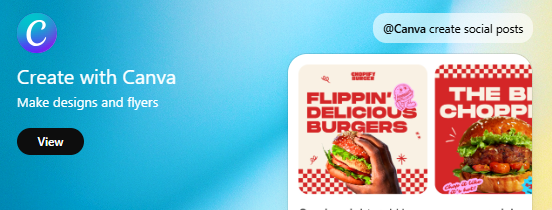
Personally, the moment this clicked for me was when I started using Canva through ChatGPT. I often deal with complex concepts that require both structured thinking and visual explanation. ChatGPT is excellent at breaking down ideas, but its native image generation struggles when you need layered, annotated, multi-step visuals. Canva, on the other hand, is powerful but time-consuming when you’re building something intricate from scratch. Combining the two changed the experience entirely. I could describe a concept, and instead of manually assembling it piece by piece, I could generate a structured visual representation that would have otherwise taken far longer to create. It felt like removing friction from both tools at once.
But that sense of fluidity doesn’t always hold. In fact, it often breaks.
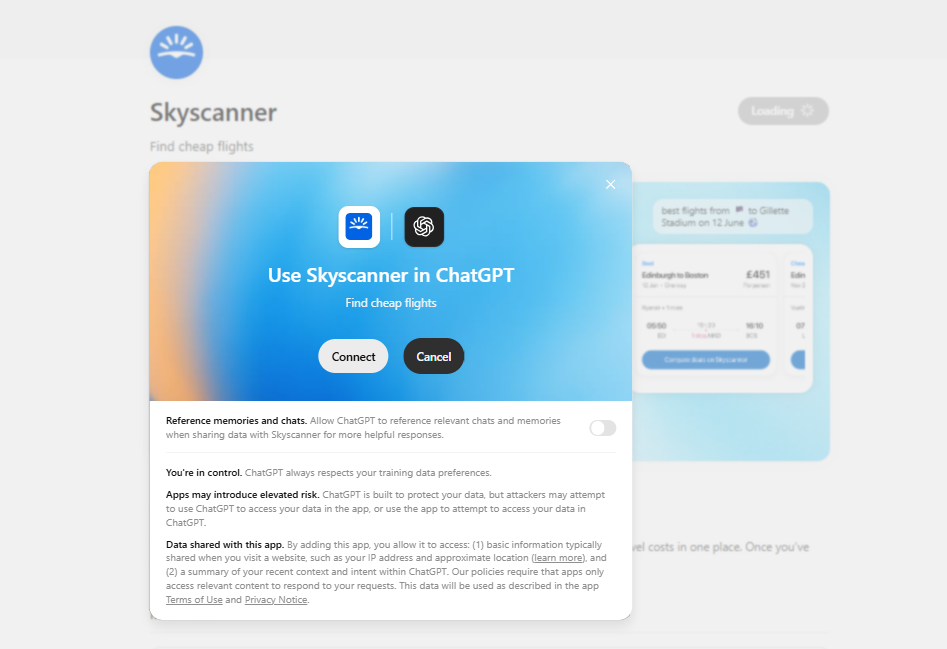
When I tried using the Skyscanner app to find flights, it simply didn’t work. The request timed out. I tried again, with the same result. What should have been a seamless experience turned into a dead end. And this isn’t an isolated issue—it’s one of the most common themes in user feedback. Many apps fail to load, integrations don’t connect properly, and permissions can become frustrating loops. The promise of effortless execution is still limited by the reality of fragile infrastructure.
There’s also a deeper issue of trust. In some cases, the outputs generated through these apps can be generic, outdated, or simply incorrect. When you’re dealing with creative work, that’s manageable. When you’re dealing with decisions—like travel bookings or financial data—it becomes a serious limitation. Add to that occasional lag, inconsistent performance, and the overwhelming number of low-quality or redundant apps, and it becomes clear that this ecosystem is still in its early stages.
And yet, none of this diminishes its significance. If anything, it reinforces it.
Every major platform shift begins like this—messy, uneven, and full of contradictions. The early internet was chaotic. The first mobile apps were simplistic and often useless. What mattered wasn’t their initial quality, but the direction they pointed toward. OpenAI Apps are following the same trajectory. Beneath the bugs and inconsistencies lies a fundamentally different model of interacting with technology.
Instead of learning tools, you describe outcomes. Instead of navigating systems, you express intent. The software layer becomes abstracted, and what remains is a conversation that drives execution.
For businesses, this shift is subtle but profound. It changes how workflows are designed. Tasks that once required coordination between multiple tools can now be initiated and completed within a single interface. Idea generation, design, analysis, and execution begin to merge into one continuous process. The efficiency gains are obvious, but the real impact lies in how work is conceptualized. It becomes less about managing tools and more about directing outcomes.
Still, it would be a mistake to assume this system is ready to replace everything. It isn’t. The reliability gap is real, and for now, traditional tools still offer stability that these apps cannot consistently match. But the trajectory is clear. As integrations improve, latency decreases, and quality control increases, the friction that currently defines the experience will gradually disappear.
What remains is a glimpse of something much larger. A system where you no longer think in terms of apps at all. You simply state what you want to achieve, and the underlying technology orchestrates the process. The apps become invisible, absorbed into a broader layer of intelligence that handles execution seamlessly.
That future isn’t fully here yet. But it’s close enough to feel.
And once it works reliably, we won’t be talking about “OpenAI Apps” anymore. We’ll just be talking to our tools—and expecting them to act.