
AI Browsing 2.0: The End of Manual Web Research (and Your 50-Tab Obsession)
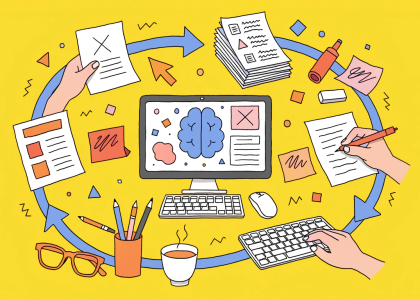
The way most people search for information today is a digital relic. We have been conditioned to act like human algorithms: we type a keyword into a search engine, navigate through a minefield of sponsored ads, bypass three “SEO-optimized” articles that say absolutely nothing, and open twelve tabs just to find one credible statistic.
We’ve been playing a high-stakes game of “Digital Where’s Waldo,” and frankly, it’s exhausting.
This is Manual Web Research. It is slow, it is repetitive, and it is the biggest productivity leak in your daily workflow. It’s the “horse and buggy” of the information age—sure, it gets you there, but you’re covered in dust and everyone is passing you by.
In the world of 99% More Efficient, we don’t “Google” things anymore. We use AI Browsing 2.0.
The Death of the “Click-and-Sift” Method
For decades, the search process has been a tedious three-step marathon: Search -> Sift -> Synthesize.
- Search: You type a query.
- Sift: You click on a link, realize it’s a recipe blog where the author spends 2,000 words talking about their grandmother’s summer in Tuscany before telling you how to boil an egg, and you hit “Back.”
- Synthesize: You finally find three good sources and manually copy-paste snippets into a doc like a digital scrap-booker.
AI Browsing 2.0 collapses this into a single step: Ask.
We aren’t just talking about a chatbot that knows facts up to 2023. We’re talking about Agentic Browsers. Tools like Perplexity, SearchGPT, and Arc Max don’t just give you links; they act like a caffeinated research assistant who reads every page for you, ignores the pop-ups, skips the “subscribe to our newsletter” banners, and hands you a cited, factual report in six seconds.
Why You’re Currently Only 1% Efficient
If you think you’re fast at Googling, you’re likely suffering from the “Expert Horse-Rider” syndrome. You’re very good at a slow process.
The average professional spends about 20% of their week just looking for information. In a 40-hour work week, that’s 8 hours of clicking. AI Browsing 2.0 kills this waste by focusing on Direct Answers with Receipts.
- Zero SEO Bloat: AI doesn’t care about “keywords” or “dwell time.” It extracts the raw data and leaves the marketing fluff in the trash where it belongs.
- The “Comparison” Shortcut: Instead of opening two tabs to compare the specs of a MacBook vs. a Dell, you ask: “Compare these two models in a table, highlighting battery life and port selection.” Boom. Done before you could even finish a sip of coffee.
- Verified Citations: The “2.0” part of the name is crucial. Unlike early AI that just made stuff up (hallucinations), these tools provide footnotes. You can verify every claim instantly. It’s trust, but with a “verify” button.
The 99% Efficient Toolstack
If you want to stop being a “manual searcher” and start being a “data architect,” you need to upgrade your kit.
- Perplexity AI (The Search Killer): Set this as your default browser search. It doesn’t give you a list of websites; it gives you an answer with sources. It’s like having a PhD student living in your search bar.
- Arc Browser (The Intuitive Agent): Their “Browse for Me” feature is black magic. It builds a mini-webpage specifically for your query, pulling info from across the web into one beautiful interface.
- NotebookLM (The Deep Diver): When you have 50 PDFs and no time to live, you feed them to Google’s NotebookLM. It becomes an expert on your data, letting you ask questions across thousands of pages instantly.
How to Pivot Today (The Workflow)
Stop the “Click-and-Pray” method. Try this tomorrow:
- The Old Way: Search “best CRM for small teams,” open 5 blogs, read reviews, take notes. (Time: 30 minutes).
- The 99% Way: Ask Perplexity: “Compare the top 5 CRMs for a 3-person creative agency. Focus on ease of use and Zapier integration. Create a pro/con list for each.” (Time: 15 seconds).
The Bottom Line
Manual web research is the digital equivalent of hand-washing your laundry. It works, but why would you do it when the washing machine exists?
The goal isn’t to be a better “searcher.” The goal is to spend zero time searching and 100% of your time applying the information. The web is messy. Let the AI clean it up for you.