Once upon a time, influencer marketing was simple.
You followed a person. That person had a face, a life, maybe a cat, maybe a messy kitchen in the background. They posted. You trusted them. Or at least you felt like you did.
Fast forward to today, and things are… blurry.
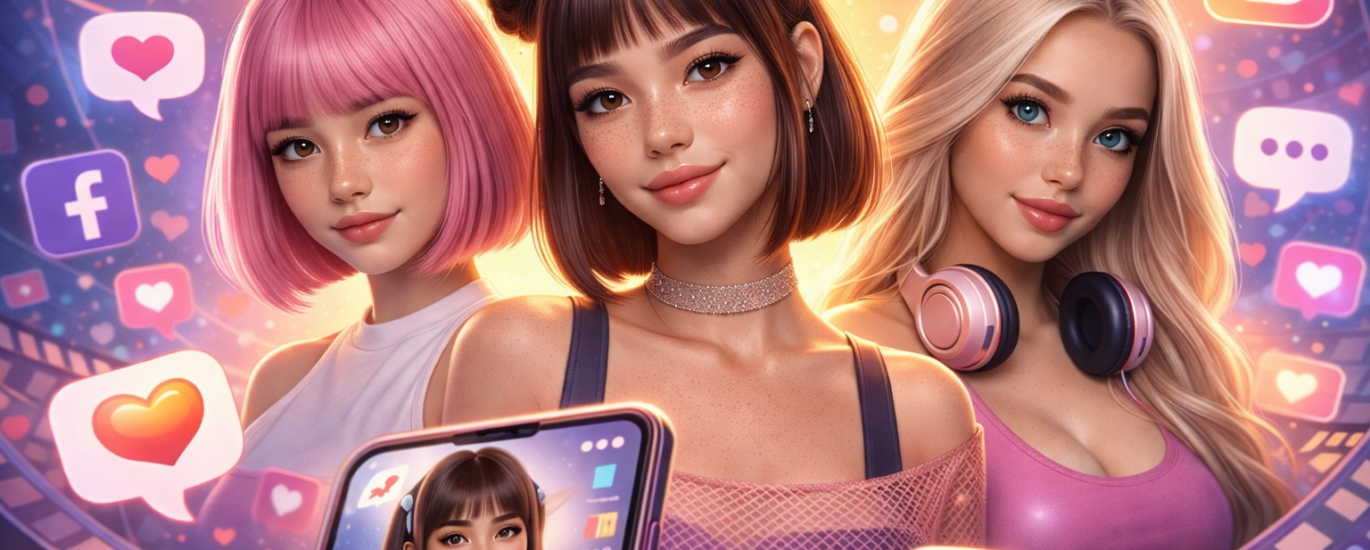
Some of the influencers promoting fashion, skincare, tech, and even mental health content aren’t people anymore. They don’t wake up tired. They don’t age. They don’t forget to post. And they definitely don’t have bad hair days.
They’re AI.
Welcome to a moment in time where we’re not entirely sure what’s real, what’s generated, and how much that actually bothers us.
Meet the Influencer Who Never Existed
AI influencers and virtual brand ambassadors are digitally created characters — powered by a mix of AI image generation, video synthesis, voice cloning, and carefully written personalities.
They smile on cue.
They always stay on brand.
They never tweet something unfortunate at 2 a.m.
From a marketing perspective, they’re a dream.
From a human perspective… well, that’s where things get interesting.
Why Brands Love Them (And Honestly, We Get It)
Let’s be fair for a moment. AI influencers solve a lot of very real problems:
No scandals
No scheduling drama
No contract renegotiations
No “I’ve changed my vibe” phase
No unpredictability
They can speak multiple languages, appear in ten campaigns at once, and never ask for a raise. From a brand’s point of view, this isn’t creepy — it’s efficient.
And efficiency is kind of the main religion of the internet right now.
The Slightly Uncomfortable Part
Here’s the thing.
Influencers were supposed to feel human. Relatable. Imperfect. Real enough that you’d trust their recommendation because you believed they had lived some version of the experience.
AI influencers don’t live anything.
They perform it.
And while we intellectually understand that, emotionally it gets weird fast. Especially when the visuals are hyper-realistic, the voice sounds natural, and the personality feels… convincing.
At some point, you stop asking “Is this sponsored?”
And start asking “Is this even a person?”
Real Examples (That Feel a Bit Too Real)
Some AI influencers are transparent about being virtual. Others… less so. And honestly, sometimes it’s hard to tell the difference.
Characters like Lil Miquela or Imma are clearly fictional — and openly so. But as AI-generated avatars become more realistic, the line keeps moving.
At this point, we’re not just consuming content.
We’re constantly performing reality checks.
Are We Okay With This? Apparently, Yes. Mostly.
Here’s the uncomfortable truth:
A lot of audiences don’t really care.
If the content looks good, feels familiar, and fits the algorithm, it works. Authenticity has quietly shifted from “this is real” to “this feels real enough.”
And maybe that says more about us than about AI.
Living in the Age of “Is This Real?”
We’re officially in an era where:
photos lie
videos lie
voices lie
faces lie
And yet, we keep scrolling.
AI influencers didn’t create this confusion — they just exposed it. They’re a symptom of a digital culture where performance often matters more than truth, and consistency beats humanity.
Final Thought
AI brand ambassadors aren’t the end of influencer marketing.
They’re a mirror.
They show us how much of what we consume online is already curated, controlled, and optimized — even when a human face is involved.
The difference now is that the mask isn’t human anymore.
And maybe the real question isn’t whether AI influencers are ethical or scary.
It’s whether we’ve already accepted a version of reality where “real” was optional all along.