
Behind AI Video Tools: How Models and Interfaces Shape Results and What We Love About Each!

How Modern AI Video & Image Tools Really Work

Every day, a new AI tool pops up promising cinematic videos, magical images, or “studio-quality” results in one click. At this point, it feels like AI tools are breeding faster than rabbits.

And sooner or later, you start seeing the same names everywhere:
Sora, Veo 3.0, SeeDance, Runway, Pika, Stable Video, Flux, SDXL

So a fair question appears:
🤯 If a tool says it uses Sora or Veo, am I basically getting the same results as using the model directly?
🤯 Or am I just using a prettier interface?

Let’s clear this up once and for all.
The Short Answer

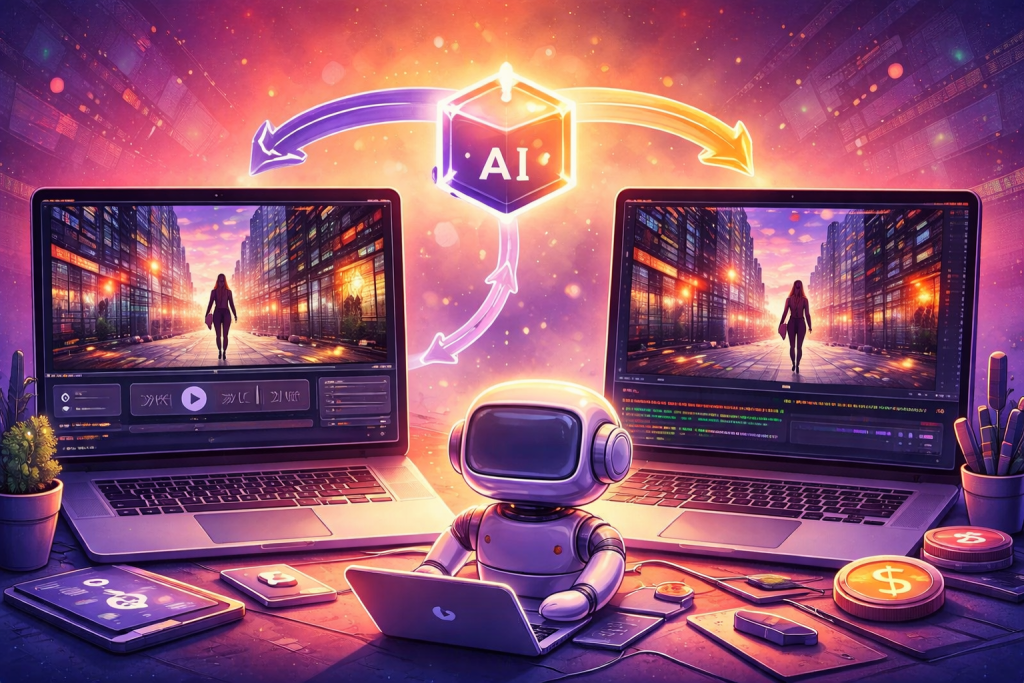
When a tool like Neoreo AI, Wayin Video, PlayPlay, or similar platforms says it uses powerful models (like Sora Veo 3.0 or SeeDance), it means:

They don’t invent a new brain.
They wrap an existing AI model inside their own system.

Think of it like this:

  • The model is the engine
  • The tool is the car
  • You’re driving with automatic transmission instead of manual

Same engine. Different driving experience.

What These “Wrapper Tools” Actually Do

These platforms don’t just pass your prompt straight to the model. They usually add:

  • Presets (cinematic, social media, marketing, storytelling)
  • Internal prompt engineering
  • Safety filters and quality controls
  • Fixed camera styles or motion logic
  • Export formats (vertical video, square, 16:9, etc.)
  • UI that hides complexity

So instead of writing a highly technical prompt with parameters, seeds, and weights, you choose:
“Marketing video”,
“Cinematic style”,
“30 seconds”,
and type a simple description.

The tool translates that into something the model understands.

Why Results Are NOT the Same as Using the Model Directly

Even if the underlying model is identical, results differ because:

1. You lose low-level control

Direct model use may let you control:

  • sampling steps
  • seed
  • style strength
  • motion intensity
  • fine prompt structure

Wrapper tools usually limit this to:

  • simple text prompt
  • style dropdown
  • duration
  • format
2. The tool optimizes for consistency, not experimentation

Direct model:

  • more creative
  • more experimental
  • but also more chaotic

Wrapper tools:

  • stable results
  • predictable motion
  • usable content
  • fewer “weird” outputs
3. They add their own “taste”

Every platform has its own idea of what looks good:

  • smoother faces
  • safer compositions
  • marketing-friendly visuals
  • fewer strange artifacts

So even with the same model underneath, the results feel different.

Examples of Tools That Work This Way

Check out our article about AI Video Generators 2025  🔗

Here are some popular video & image tools that act as model wrappers:

🎬 Neoreo AI

Uses advanced generation models under the hood and packages them into:

  • preset workflows
  • simple prompt interface
  • fast output

🎬 Runway

Built on its own models and external ones.
More control, but still wrapped in UI.
More expensive, more powerful.

🎬 Pika

Focuses on short cinematic clips.
Very user-friendly.
Less control, but great for social content.

🎬 Wayin Video

Focused on marketing and business video creation.
They use AI models for visuals but add:

  • templates
  • brand controls
  • subtitles
  • layouts

Are These Tools Cheaper Than Using Models Directly?

So, are these wrapper tools cheaper than using AI models directly? Usually, no. Wrapper tools are easier and faster to use. You don’t need GPUs or coding skills. That makes them very attractive for creators and small teams.

But this convenience has a cost. You often pay more per video or image. Credit systems can hide how much you actually spend. In reality, you’re paying for the interface, hosting, presets, and support — not just the model itself.

Direct access to AI models can be cheaper if you use them a lot and want full control. But it is also more technical and requires more trial and error. For most creators and small teams, wrapper tools still make sense because saving time is more important than having perfect control.


Final Thought 🧠

AI models are becoming powerful.
AI tools are becoming friendly.

And most of what we use today are not “new brains” — they are new ways of driving the same brains.

Understanding this makes choosing tools easier, expectations more realistic, and disappointment much rarer.

You don’t need the raw engine if what you really want is a smooth ride.

Sometimes, the wrapper is the product.

About the Author

Coh

Multimedia specialist & editor / covering AI, innovation and the tools shaping modern work.

You may also like these

Verified by MonsterInsights