

Why the younger generation is flocking to it — and why I used it to build my own editor-side AI reviewer
There’s a new kid at the AI-building lunch table.
And unlike a lot of AI products that feel like they were designed by a committee of enterprise sales reps in quarter-zips, Lovable feels internet-native.
Fast. Visual. Playful. Social. A little chaotic in a good way.
That matters.
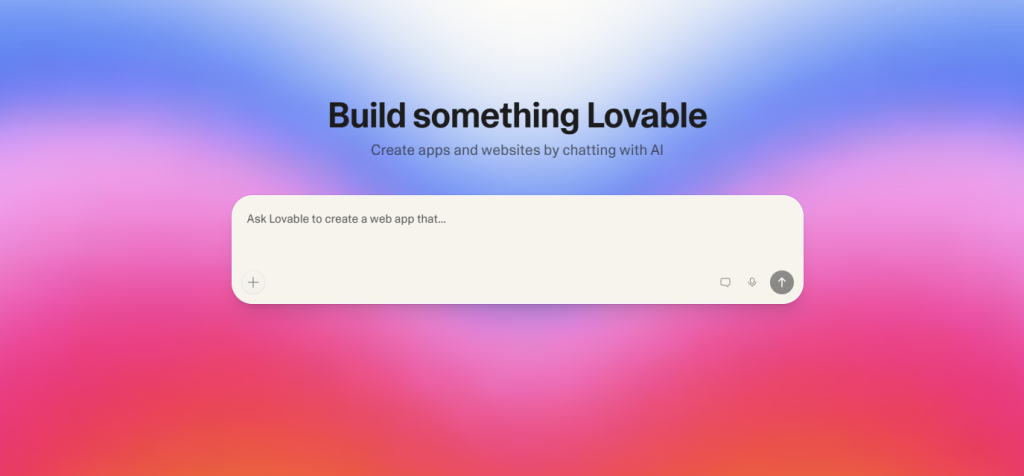
Because in the last year, “vibe coding” stopped being a joke and became a real category. And Lovable has become one of the loudest names in it. Officially, Lovable positions itself as a full-stack AI development platform that lets people build and deploy web apps with natural language, including frontend, backend, database, authentication, and integrations. It also supports GitHub sync and portable code ownership, which is a big deal if you do not want your prototype trapped in a black box.
That’s the functional explanation.
But the real story is more interesting:
Lovable didn’t just sell software. It sold a feeling.
It made app creation feel less like “software engineering” and more like “sending a very ambitious text message.”
And that is exactly why younger builders love it.
The rise of vibe coding’s favorite toy
Lovable’s growth has been ridiculous.
In early 2025, the company said it had hit $10M ARR in roughly 60 days with a team of about 15 people. By July 2025, Forbes reported it had reached $100M in subscription revenue on an annualized basis in just eight months. And as of March 2026, TechCrunch reported Lovable had crossed $400M ARR in February.
That kind of growth does not happen because a tool is merely “useful.”
It happens because a tool becomes a movement.
Lovable seems to have understood something many older software companies miss: today’s younger builders do not want a 46-tab setup tutorial before they can test an idea. They want to open a browser, type what they want, and watch something real appear. Lovable’s product and docs lean hard into that promise: no deep coding skills required, no IDE-first workflow, and a path from prompt to working app with backend options like Lovable Cloud or Supabase.
That’s catnip for a generation raised on TikTok speed, creator tools, and instant feedback loops.
My bet on why Lovable clicked so fast
Here’s my theory:
Lovable feels like it was built by people who understand how younger internet users actually behave.
The company’s leadership is young by startup standards. Forbes reported in late 2025 that cofounders Anton Osika and Fabian Hedin were 35 and 26, respectively, with Hedin becoming one of Europe’s youngest self-made billionaires after Lovable’s later funding surge.
But I do not think age alone explains it.
The more important piece is distribution.
Lovable did not just build a product. It built a builder-media machine around the product: launch content, tutorials, community videos, templates, ambassador programs, social amplification, and its own “Lovable Launched” showcase that encourages people to publish, share, and get discovered. The company has explicitly written about using Product Hunt, social media, creator-style content, and community engagement to get traffic and attention.
That is a very modern playbook.
Older dev tools often market like this:
“Here is our infrastructure abstraction layer for modular productivity.”
Lovable markets more like this:
“Build something fun today. Show it. Launch it. Iterate tomorrow.”
That difference is massive.
Because for younger founders, students, indie hackers, creators, and “I-have-an-idea-at-11:47-p.m.” people, the dream is not “learn the stack.”
The dream is ship before motivation expires.
Lovable gets that.
How I use Lovable myself
This is the part I like most: it is not just hype.
I actually used Lovable to build a small app for one of my own workflows.
I serve as an editor for a journal, and one of the recurring pains is manuscript triage. Every submission comes with the same hidden question:
Is this paper structurally ready, or is it about to become a slow-motion administrative headache?
So I built a small app with Lovable that uses the Gemini API to review submitted manuscripts.
Here’s what it does:
I fed the app our Author Guidelines, and now it checks manuscripts for:
- inconsistencies
- grammar issues
- structural problems
- formatting gaps
- guideline mismatches
Then it gives me two outputs:
First, a reply-ready summary I can send or adapt quickly.
Second, a full internal review with correction tips so authors can see what needs fixing before the manuscript goes deeper into the editorial process.
That is the kind of project that used to die in the notes app graveyard.
Not because it was a bad idea.
Because it sat in the annoying middle zone: too custom for off-the-shelf software, too small to justify a traditional dev cycle, and too technical to build from scratch on a random Tuesday.
Lovable crushed that gap.
And that is really its superpower:
It turns “I wish this existed” into “I made it this week.”
Why that matters more than people think
A lot of people still evaluate tools like Lovable the wrong way.
They ask:
“Can it replace professional developers?”
That is not the most interesting question.
The more interesting question is:
How many useful internal tools, workflow helpers, side projects, landing pages, micro-SaaS apps, and weird little business ideas never get built because the friction is too high?
That number is enormous.
Lovable attacks friction.
It lowers the cost of experimentation.
And once experimentation becomes cheap, creativity goes nuts.
That is why vibe coding is not just a meme. It is a behavior shift.
People are moving from:
- learning to code for years before shipping
- hiring expensive help too early
- letting ideas rot in documents
to this:
- describe the thing
- get a working version
- tweak it live
- connect APIs
- ship it
- fix it later
That’s not traditional software development.
That’s software development dragged into the attention economy.
How to get started with Lovable, step by step
If you want to try it, here’s the simplest path.
Step 1: Start with one narrow problem
Do not begin with “I want to build the next unicorn.”
Begin with:
- a client intake tool
- a manuscript checker
- a grant application helper
- a CRM for one niche workflow
- an internal dashboard
- a simple directory
- a landing page with a useful backend
Lovable is much better when the first prompt is specific.
Bad prompt:
“Build me an app for business.”
Better prompt:
“Build me a web app that lets journal editors upload manuscripts in DOCX or PDF, checks them against author guidelines, flags structural and grammar issues, and generates an editor summary plus author-facing correction suggestions.”
That is meat. Give the AI meat.
Step 2: Describe the app like you’re briefing a smart intern
Lovable works well when you explain:
- who the user is
- what they want to do
- what inputs they provide
- what outputs they should receive
- what pages the app needs
- what tone or style the interface should have
Write like this:
“Create a clean web app for journal editors. The homepage should explain the tool. The main dashboard should let users upload a manuscript and compare it against stored author guidelines. The result page should show a compliance score, a short editor-ready summary, and a longer correction report.”
That usually gets you way further than technical jargon.
Step 3: Build the first ugly version fast
Do not chase perfection in version one.
You want proof of motion.
Get these basics working first:
- interface
- upload flow
- result screen
- one core action
If the skeleton works, the rest becomes iteration.
Step 4: Add your real logic
This is where the fun starts.
Lovable supports full-stack workflows and integrations, including backend options and external tools like Supabase, GitHub, and Stripe-style payment setups, depending on what you’re building.
For my tool, that meant connecting the Gemini API and using my own editorial guidelines as the app’s judgment framework.
This is the unlock:
Do not just build pretty screens. Feed the app your real knowledge.
That could be:
- author guidelines
- SOPs
- checklists
- service rules
- templates
- internal criteria
- review frameworks
The more context you give it, the more useful the output.
Step 5: Keep prompting like a product manager
Once version one exists, stop acting like a user and start acting like a nitpicky founder.
Tell Lovable things like:
- “Make the summary more concise and editor-friendly.”
- “Add a red warning box when the manuscript misses required sections.”
- “Create separate tabs for grammar, structure, and guideline compliance.”
- “Show a percentage compliance score.”
- “Improve the UI to look more academic and professional.”
- “Add a copy-to-clipboard button for the reply-ready summary.”
This is where vibe coding becomes addictive.
Because now you are not staring at theory.
You are steering a product.
Step 6: Sync to GitHub if the project matters
One of the smart things about Lovable is that it supports GitHub sync and makes code portable. So if your app starts becoming valuable, you can preserve it, extend it, collaborate on it, or move it beyond the platform later.
That removes one of the biggest fears people have with AI builders:
“What if I build something useful and then get stuck?”
Step 7: Launch something embarrassingly small
This is where most people fail.
They keep “improving” instead of publishing.
Do the opposite.
Launch a tiny useful thing.
A manuscript checker.
A client proposal generator.
A niche calculator.
A reviewer dashboard.
A lab workflow helper.
Small wins teach faster than big plans.
And Lovable itself leans into launching, showcasing, and sharing projects through its community ecosystem and social loops.
The bigger picture
Lovable is not winning because it has the most intimidating technical pitch.
It is winning because it makes software feel culturally accessible.
That sounds fluffy, but it is not.
That is distribution. That is adoption. That is why people talk about it.
It sits at the intersection of three very powerful things:
- AI
- no-code-ish behavior
- creator-style internet distribution
That combo is explosive.
And for a younger generation that grew up customizing everything, publishing constantly, and expecting instant output, Lovable feels less like a dev tool and more like a natural extension of how they already work.
Which is probably why it has become one of the defining tools of the vibe coding era.
And honestly?
I get it.
Because once you use it to build one small thing that actually saves you time — like an app that reads manuscripts, checks them against editorial rules, flags inconsistencies, improves grammar, and drafts a usable review summary — your brain starts doing something dangerous:
It starts scanning your whole life for workflows that deserve their own app.
That is when the rabbit hole begins.
And that is exactly why Lovable is having a moment.