

Not long ago, creating something meant investing time, skill, and usually a bit of frustration.
You learned software.
You struggled with drafts.
You started over.
You improved slowly.
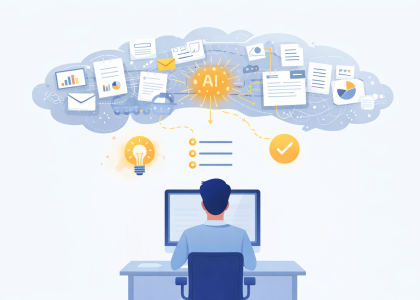
Today, you can open an AI tool, type a sentence, and get:
- a logo
- a presentation
- a marketing plan
- a song
- a video script
All in minutes.
So the question isn’t whether we can make things anymore.
The question is: when everything becomes easy to make, what actually becomes valuable?
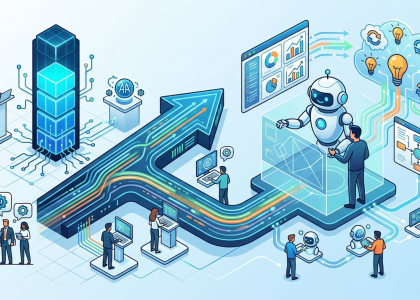
The Shift From Creation to Direction
AI hasn’t removed creativity — it’s shifted where creativity lives.
Before, value often came from execution.
Knowing how to design, edit, animate, or write was the hard part.
Now, execution is increasingly automated.
The hard part is deciding:
- What should exist in the first place?
- What is worth refining?
- What actually communicates something meaningful?
In other words, we’re moving from makers to directors.
Taste Is Becoming a Skill
When AI can generate ten versions instantly, the differentiator is no longer “Can you make this?” but:
“Can you recognize which version is good?”
This is where taste, judgment, and context matter more than technical ability.
AI can produce options.
It cannot decide which one aligns with:
- a brand
- a message
- a cultural moment
- a real audience
That decision still belongs to humans.

The Paradox of Infinite Output
Generative AI didn’t just make creation faster — it made it abundant.
And abundance changes value.
When images were hard to make, images were valuable.
When writing was slow, writing carried weight.
Now, the scarce resource is no longer production.
It’s attention.
This is why many creators are discovering that the challenge isn’t generating ideas — it’s filtering them.
Some researchers and analysts describe this moment as a shift toward “curation economies,” where selecting and refining matters more than raw output. You can see this broader discussion reflected in how creative workflows are evolving across industries in analyses like .
Editing Is the New Creating
Many AI users notice the same pattern:
they don’t spend time making things from scratch —
they spend time:
- adjusting prompts
- rejecting outputs
- refining tone
- aligning results with intent
The real work becomes shaping direction, not producing volume.
We explored a similar shift while discussing how asking better questions changes outcomes in our own piece on — because once generation is easy, clarity becomes the bottleneck.
Human Effort Moves Upstream
AI doesn’t eliminate effort.
It moves effort earlier in the process.
Instead of:
Make → Fix → Finish
We now do:
Decide → Guide → Refine
This requires different strengths:
- judgment over mechanics
- context over speed
- intention over output
And those are harder to automate.
Authenticity Becomes More Noticeable — Not Less
Ironically, when synthetic content becomes common, genuinely human perspective becomes easier to spot.
Not because AI is “bad,”
but because AI is neutral.
It doesn’t have lived experience.
It doesn’t care about consequences.
It doesn’t choose meaning.
Humans do.
And that layer — intention — is where value concentrates.
So What Becomes Valuable?
Not the ability to generate.
But the ability to:
- ask the right question
- recognize what matters
- apply context
- shape outcomes instead of accepting defaults
AI lowered the barrier to making things.
It raised the importance of knowing why to make them.
Final Thought
When everything is easy to produce, production stops being impressive.
What stands out instead is:
clarity, judgment, and purpose.
In the age of AI, value doesn’t disappear.
It just moves — from the tools we use
to the choices we make.