The Rhythm AI Broke
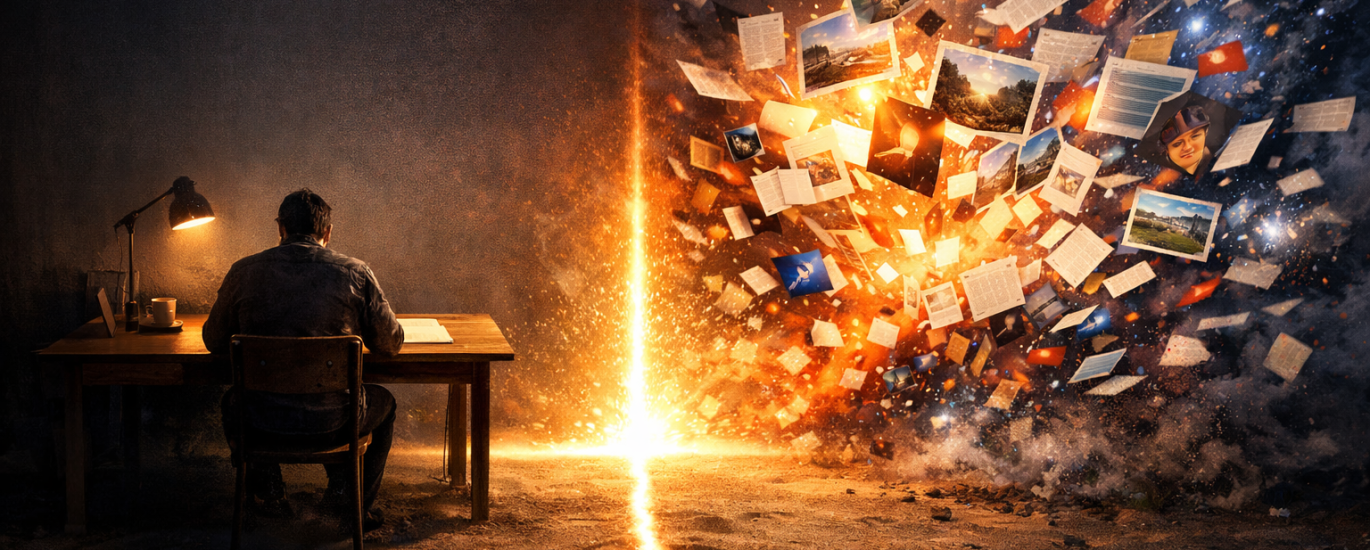
Not long ago, creative work followed a familiar rhythm.
You started with a blank page, struggled for a while, doubted yourself, then revised and polished until you finally felt something was ready to be shared.
AI quietly broke that rhythm.
Today, the hardest part of creating isn’t starting anymore. It’s stopping.
When Options Become the Problem
AI didn’t just make work faster. It made options endless. You don’t get one draft. You get ten. You don’t get one image. You get fifty.
Inspiration doesn’t need to arrive. It’s already there, blinking at you.
And with that abundance comes a new question:
When is something actually done?
From Scarcity to Overload
Creativity used to be shaped by scarcity. Ideas were precious because they were slow. You protected them, overthought them, and refined them until you were almost tired of them.
Now, ideas are cheap. Attention is expensive.
The creative challenge is no longer: Can I do this? It’s: Is this worth doing?
The 100-Generation Trap
Here’s the part we rarely admit.
After 20, 50, or 100 generated images or video variations, something strange happens.
The output starts drifting. What once felt close to your original idea slowly turns into something else entirely.
And the frustration grows as you realize a hard truth:
the first or second generation was often the closest to what you actually wanted.
More options don’t always mean better results.
Sometimes they just mean more distance from the original spark.
AI Can Generate — It Can’t Decide
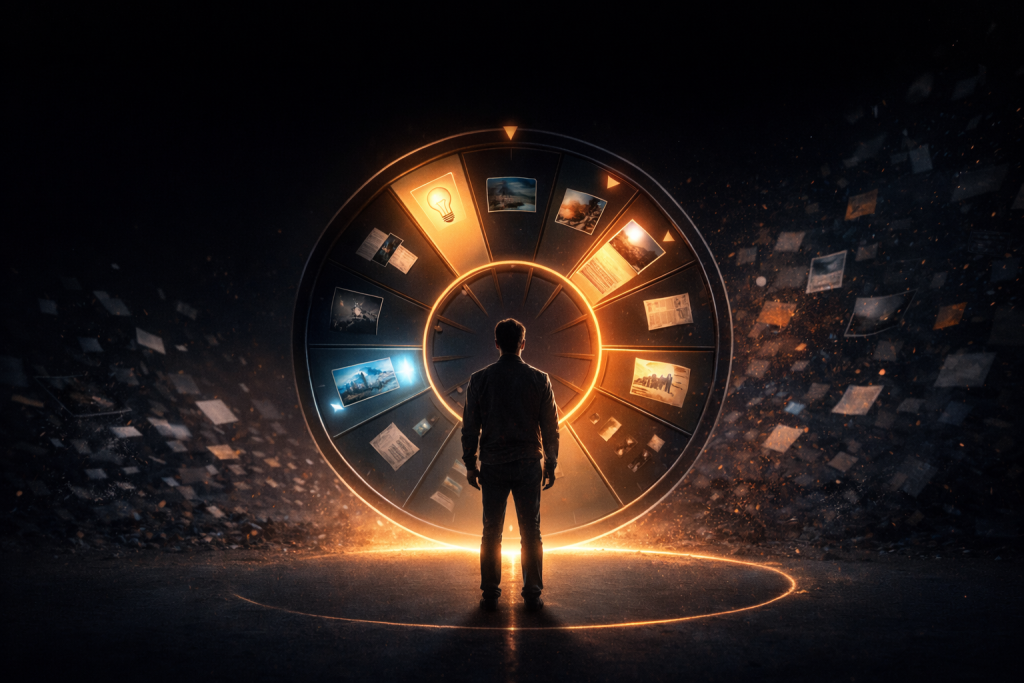
AI tools are great at generating. They’re terrible at deciding.
That responsibility hasn’t disappeared. It’s shifted.
At some point, you have to say:
This version is good enough.
This image works.
This idea doesn’t need one more variation.
Knowing when to stop is becoming one of the most important creative skills today.
From Creator to Editor-in-Chief
There’s a quiet fear that AI is replacing creativity. But what’s actually happening feels different.
We’re not creating less.
We’re editing more.
We choose, discard and shape.
We move from creators to editors-in-chief of our own ideas. And that role depends on taste, judgment, and restraint — things AI still doesn’t have.
The Most Human Skill Left
AI removed friction from starting.
It didn’t remove responsibility from finishing.
In a world where everything is possible, real creative power lies in choosing what matters and letting the rest go.
Sometimes the most human move isn’t generating more.
It’s knowing when to say:
This is enough.