
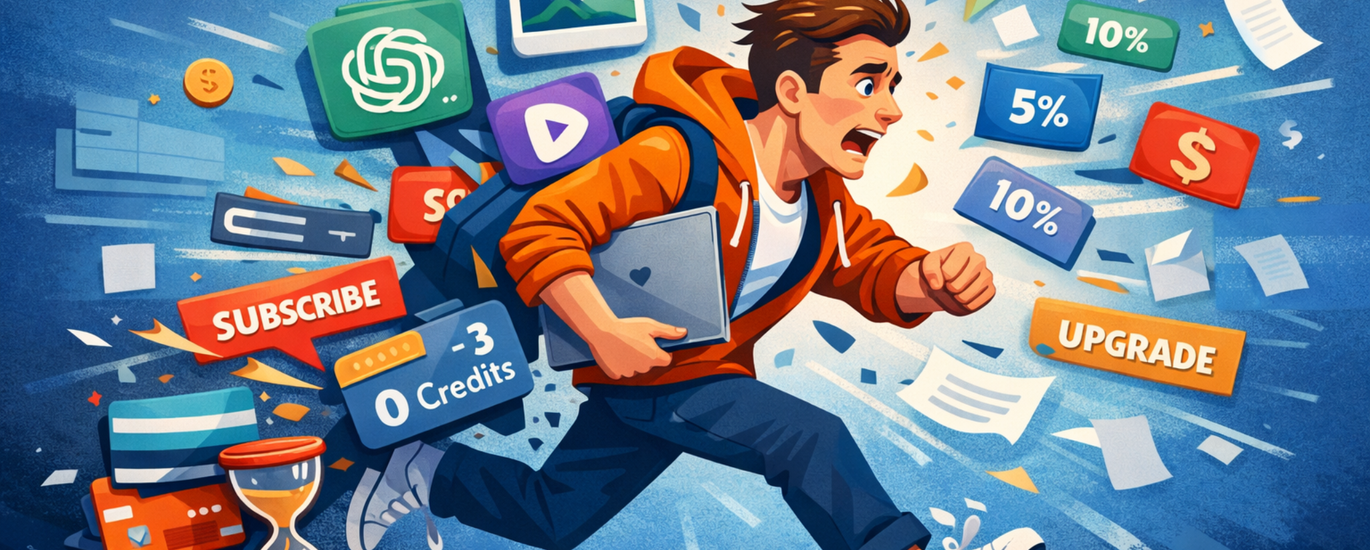
AI tools suck you in with prices that seem harmless. A few bucks here, a “starter” plan there, maybe a free trial to get your feet wet. At first, you think, “Hey, I can handle this.” Then you actually start using them.
And suddenly, your credits vanish.
You run into limits you never noticed before. Those features you thought you’d get? Turns out, they’re locked behind pricier plans. Before you know it, you’re juggling a pile of subscriptions—five, six, maybe even ten—all quietly charging your card every month.
This isn’t just you. This is what AI looks like right now.
Why AI Pricing Feels Like a Maze
If you’re a creator, marketer, or working on a small team, this gets even messier. Testing new tools is part of the job. You’re not just sticking to one app—you’re trying everything. Image generators, video tools, copywriting bots, ad creators, transcription, automation… Each one promises to save you time or spark some big idea.
But here’s the catch: most AI tools price things with credits, not the kind of usage that makes sense at a glance.
They rarely tell you:
- How many real, finished things you’ll get a month
- How fast those credits disappear once you stop “playing around” and actually work
- What it actually costs to experiment
A few tries at making a video, a couple image edits, one or two failed prompts—and boom, you’re out of credits for the month.
The Credit Drain Is Real
Credits don’t feel real—until they’re gone. You try to make a video. Almost right, but not quite. So you tweak the prompt. Try again. And again.
That “50 credits” you paid for? It turns into maybe three things you can use. You can’t really guess how many credits you’ll burn through, especially when:
- You’re testing a bunch of tools
- Quality jumps all over the place from one attempt to the next
- You have to pay for every try, even if most results end up in the trash
Budgeting? Forget it. Planning? Good luck.
The Trap: “Well, I Already Paid…”
There’s another thing nobody talks about much: the mental side. Once you pay for a subscription, you feel like you’re supposed to use it—even if:
- It doesn’t really do what you hoped
- It doesn’t fit your workflow
- You only touch it once or twice a month
So you hang onto it “just in case.” You keep telling yourself you’ll use it more next month.
Now stack that up across a bunch of tools. Suddenly, you’re paying for a bunch of software that mostly sits there, not because you need it, but because you already paid.
How Do You Decide What’s Actually Worth Paying For?
Don’t get stuck asking, “Is this tool cool?” Ask yourself: How often will I really use this?
- Daily vs. Once-in-a-While
Stuff you use all the time—writing, editing, transcribing, researching—that’s usually worth the subscription. Tools you only use here and there (video, music, weird visuals)? Pay-as-you-go is better, if you can.
- Quality vs. Just More Stuff
Some tools spit out a ton of results, but only a few are useful. Others give you fewer options, but most of them are solid. A cheaper plan isn’t really cheaper if you need ten tries to get one thing that works.
- Subscription vs. Pay-As-You-Go
Subscriptions work when you know you’re going to use the tool a lot. Credits make sense for experiments—if you really know how fast you’ll burn through them. If you can’t guess how much you’ll use it, be careful before subscribing.
- Are Free Tiers Actually Useful?
Most free tiers are just demos. Good for seeing what a tool can do—not for seeing if it actually fits your real work. If the free version never gives you a usable result, it’s not a test drive. It’s just marketing.
To Subscribe or Not to Subscribe: The Paid Plan Dilemma
Being
intentional with AI spending doesn’t mean opting out of innovation. It means
choosing tools that actually fit how you work — and letting the rest go without
overthinking it.
Sometimes
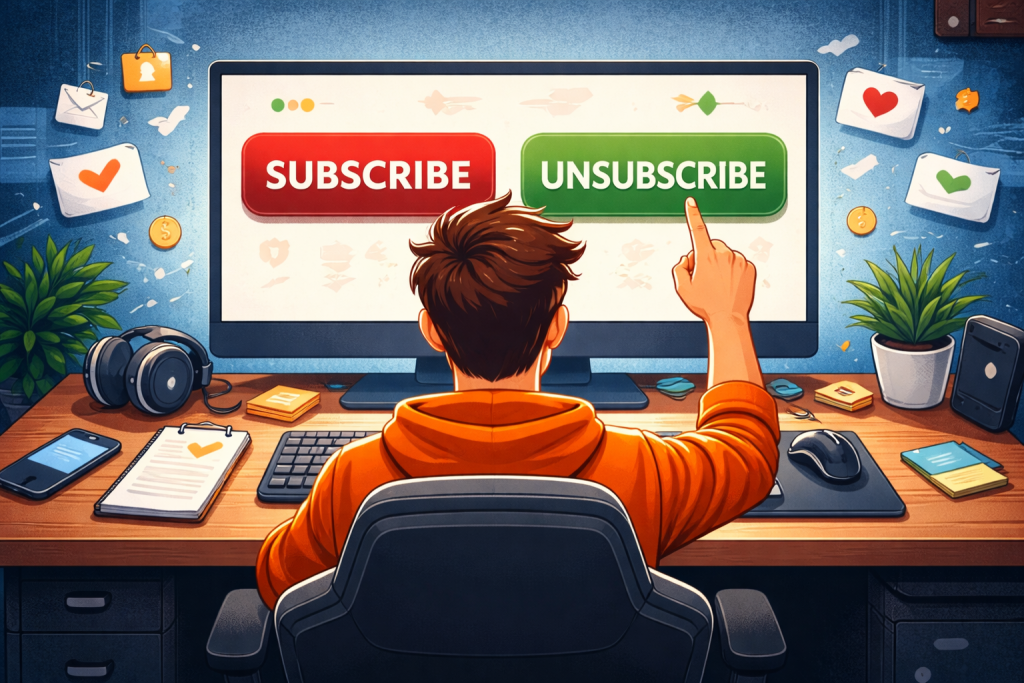
the smartest move isn’t another subscription.
It’s hitting “cancel” and giving yourself permission to focus.