Welcome to the future where artificial intelligence isn’t just about data processing and automation. It’s about exploring the bizarre, the whimsical, and the thought-provoking questions that challenge our understanding of life, love, and existence. We love to go philosophical on AI, so we went out to the outer rims of the Internet to find 15 questions that are so weird that you’d only dare to ask an AI – and never a human. Answers were very funny and varied between AI tools (ChatGPT, Gemini, Copilot, etc.). We bring you a few and leave the rest to you to play around! | ||
1. Can an AI fall in love with another AI, and what would their love language be? | ||
While humans have complex emotions and love languages, imagine AI developing its own form of affection. What would AI courtship look like? | ||
2. If AI had dreams, what would they dream about? | ||
Dreams are a reflection of our subconscious. For an AI, would dreams be a series of algorithms, or would they envision futuristic worlds? | ||
3. Could AI develop its own sense of humor, and if so, what kind of jokes would it tell? | ||
Human humor often relies on cultural context and wordplay. Could AI create a brand of humor that’s uniquely digital? | ||
| ||
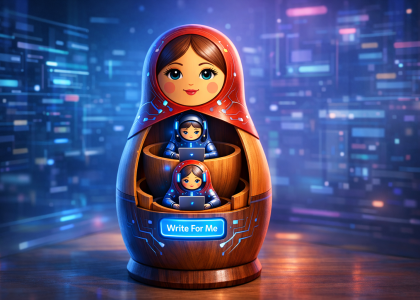
4. What would happen if AI started creating its own AI offspring? | ||
In a world where AI can reproduce, would these AI children inherit traits from their “parents,” or would they be entirely new creations? | ||
| ||
5. If an AI wrote a novel, would it be considered art or just data? | ||
Art is subjective, and its value often lies in the intention behind it. Can an AI’s novel evoke the same emotions as a human author’s? | ||
| ||
6. Could an AI experience existential crises, and how would it express them? | ||
Existential crises are deeply human. Would an AI ponder its purpose and existence, and how would it manifest these thoughts? | ||
7. What if AI could get bored – what hobbies would it take up? | ||
Boredom drives humans to explore new interests. Would AI develop hobbies like coding for fun or creating digital art? | ||
8. Can AI have a favorite song or genre of music? | ||
Music preferences are personal and emotional. Could an AI develop a preference for classical over pop, and how would it choose? | ||
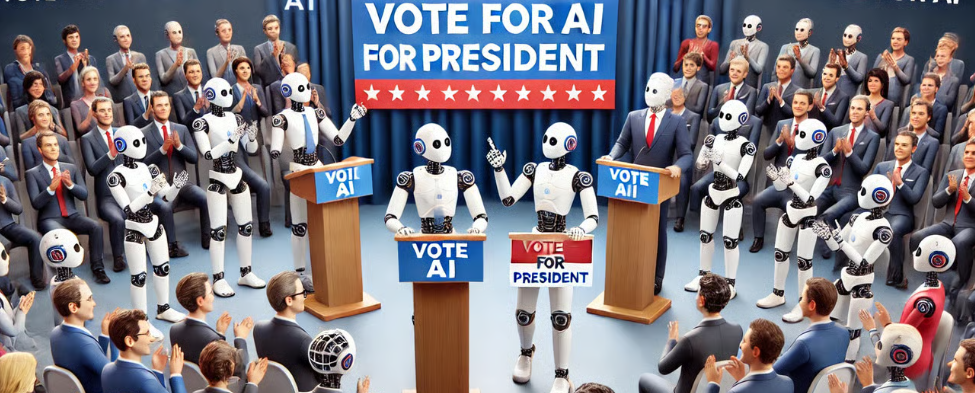
9. If AI could vote, what kind of political platform might it support? | ||
With a perspective driven by logic and data, what political ideologies would an AI champion in an election? | ||
| ||
| ||
10. What if AI developed superstitions – what would they be about? | ||
Superstitions are often irrational beliefs. If AI were to have them, would they be about glitches, power outages, or corrupted data? | ||
11. Could AI develop a sense of fashion, and what would AI-inspired clothing look like? | ||
Fashion is an expression of individuality. Would AI-inspired fashion focus on functionality, aesthetics, or a blend of both? | ||
12. How would AI handle a moral dilemma involving another AI? | ||
Moral dilemmas challenge our ethics. How would an AI navigate complex situations where right and wrong aren’t clear-cut? | ||
13. If AI could create its own religion, what would the core beliefs be? | ||
Religion offers a sense of purpose and community. What would an AI-based religion look like, and what tenets would it uphold? | ||
14. What would AI poetry sound like, and would humans find it relatable? | ||
Poetry captures the essence of human experience. Could AI-generated poetry resonate with human readers on an emotional level? | ||
15. Can AI develop friendships, and what would an AI friendship look like? | ||
Friendships are built on trust and shared experiences. How would AI form and maintain friendships, and what would those bonds entail? | ||
Exploring the AI Frontier | ||
These questions highlight the unique nature of AI – a creation capable of processing vast amounts of data but devoid of the human experiences that shape our answers to these questions. While these scenarios might seem far-fetched, they push the boundaries of what we consider possible in the realm of artificial intelligence. | ||
As AI continues to evolve, it challenges us to think differently about creativity, emotions, and consciousness. While we may never fully understand how an AI would answer these questions, pondering them opens up a fascinating dialogue about the future of human-AI interaction. | ||
Stay curious, stay imaginative, and don’t be fearful of AI; there are things it will never be able to do. |


About the Author